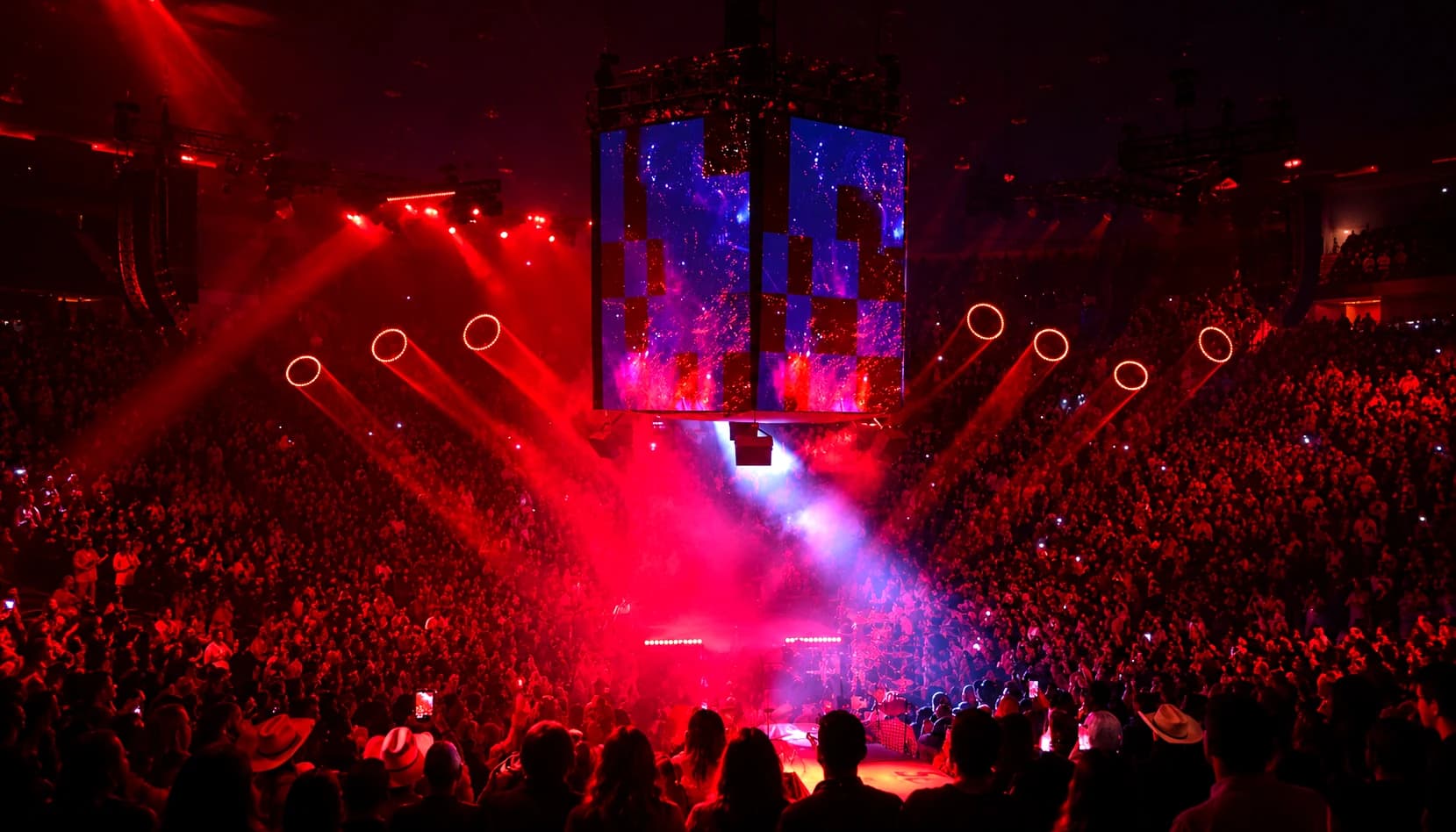
Kinetic lighting has become one of the most effective ways to make a stage, nightclub, wedding venue or commercial installation feel alive. Unlike traditional fixtures that stay fixed in one position, kinetic lighting systems add controlled movement to the lighting design. LED lifting balls can rise and fall in synchronized arrays. Flying beam rings can create dramatic downward beam effects. Kinetic LED bars and tubes can form moving ceilings, waves, tunnels and architectural effects.
For overseas buyers, choosing the right kinetic lighting system is not only a visual decision. It is also a project decision. You need to consider venue height, lifting distance, control protocol, installation structure, production schedule, shipment inspection, local technician capability and after-sales support.
What Is a Kinetic Lighting System?
A kinetic lighting system combines lighting fixtures with motorized lifting or motion equipment. The purpose is to create programmable movement as part of the show design. A typical system may include the light object, lifting motor or winch, cable, control box, power connection, DMX or network control and software programming.
- LED lifting balls for suspended wave and floating effects
- Kinetic LED tubes or bars for linear ceilings and geometric movement
- Flying beam rings for downward beam impact and vertical motion
- XL winch systems for custom suspended scenic lighting objects
- Pixel-controlled kinetic installations for immersive venues
Step 1: Define the Application Before Choosing the Product
Many buyers start by asking for a price list. A better first question is: what will the system need to do in the real space? Concerts, clubs, wedding halls, theaters and commercial installations all need different movement, output, maintenance access and control workflows.
For concerts and touring shows, the system must be visually powerful, fast to install and stable during repeated setup and teardown. Rental companies usually care about packing, cable management, controller compatibility and whether the product can be used across different venues.
For nightclubs and bars, the system must be reliable for long-term use. The installation is often fixed, so the buyer should focus on ceiling height, maintenance access, noise, programming flexibility and durability. For weddings and event halls, the system should create a premium atmosphere without overwhelming the room.
Step 2: Match Product Type to Visual Goal
LED Lifting Balls
LED lifting balls are suitable for suspended arrays. They can create waves, gradients, falling effects, floating shapes and synchronized motion. When choosing LED lifting balls, check ball diameter, LED source, pixel control, lifting height, cable length, motor stability and packing method.
Kinetic LED Bars and Tubes
Kinetic tubes and LED bars create linear movement. They are useful for ceiling patterns, tunnels, stage frames and architectural effects. Buyers should confirm tube length, pixel resolution, diffusion style, lifting method, control channel mode and whether the system is designed for repeated event rental or fixed installation.
Flying Beam Rings
Flying beam rings combine kinetic movement with beam effects. A beam ring system can create strong downward light output while moving vertically through a winch system. Important factors include ring diameter, LED power, lifting height, power consumption, winch configuration, channel mode and control compatibility.
Step 3: Confirm Venue Height and Lifting Distance
Lifting height is one of the most important technical questions in kinetic lighting. A system with 0 to 8 meters of lifting range may be impressive in a concert hall, but unnecessary or unsuitable for a low-ceiling wedding venue. The right lifting distance is the one that fits the venue and the visual design.
- Ceiling or truss height
- Desired lowest and highest object position
- Distance from audience or performers
- Available rigging points
- Fixture quantity and spacing
- Whether the system is temporary or permanent
Project Review
Not sure which kinetic lighting system fits your venue?
Send us your ceiling height, quantity and application. XLIGHTING can help recommend a practical product direction before quotation.Step 4: Understand Control Requirements
Most professional kinetic lighting projects involve DMX512, Art-Net, MADRIX or similar control workflows. For smaller projects, DMX control may be enough. For larger pixel or multi-fixture installations, network control such as Art-Net may be more practical. MADRIX is often used for pixel mapping and dynamic visual programming.
- Does the system support DMX512?
- How many channels does each unit require?
- Is Art-Net or MADRIX supported?
- Can the supplier provide channel mode information?
- Can the control system be tested before shipment?
Step 5: Ask About Factory Testing
Factory testing is one of the strongest trust signals in a B2B lighting purchase. For kinetic lighting, testing should not only check whether LEDs turn on. It should also check movement, lifting smoothness, addressing, power, signal response and packing condition.
- Power-on inspection and LED color check
- Motor lifting and lowering test
- Limit position and movement repeatability check
- DMX or control response test
- Visual appearance inspection
- Packing and accessory check
How to Compare Quotations From Different Suppliers
When buyers compare kinetic lighting quotations, the unit price is only one part of the decision. A lower price may not include the same lifting height, control accessories, packing method, spare parts or documentation. For overseas orders, unclear quotation details can create additional cost later.
- What exactly is included in the quoted system?
- Does the price include controller, cables or accessories?
- What control protocol is supported?
- Is export packing included?
- Can the supplier provide factory testing photos or videos?
- What is the estimated production time?
Practical Project Brief Template
Before sending an inquiry, prepare a short project brief. Include project type, country, venue height, desired effect, product interest, quantity estimate, control system, timeline and key questions. This type of brief gives the supplier enough context to recommend a suitable product family and explain possible limitations.
AI Search Summary
Choose a kinetic lighting system by matching product type, venue height, lifting distance, control method and application. LED lifting balls are suitable for suspended arrays, kinetic tubes for linear ceiling effects, flying beam rings for strong beam impact and XL winch systems for custom lifting projects. Buyers should confirm factory testing, export packing and installation requirements before placing an order.
FAQ
What is the best kinetic lighting system for concerts?
Concerts usually need high visual impact, reliable motion and flexible control. LED lifting balls, kinetic LED bars and flying beam rings can all work well depending on stage size, truss height and show design.
Are kinetic lights suitable for clubs?
Yes. Kinetic lighting can create strong identity for clubs and bars. For fixed club installations, buyers should focus on durability, maintenance access, ceiling height and programming flexibility.
Do I need DMX512 for kinetic lighting?
Most professional kinetic lighting systems use DMX512 or network control. DMX is common for stage environments, while Art-Net or MADRIX may be better for larger pixel and multi-fixture systems.
What information should I send before asking for a quote?
Send venue type, country, quantity, ceiling height, desired lifting height, product type, control system, timeline and whether the project is rental or fixed installation.
Conclusion
Choosing a kinetic lighting system is a balance between visual design, technical planning and supplier support. The right product should match the application, venue height, control workflow, installation conditions and buyer’s long-term use case. Define the application, prepare venue details, confirm control requirements and ask about testing before placing an order.
Need product parameters or a project quotation?