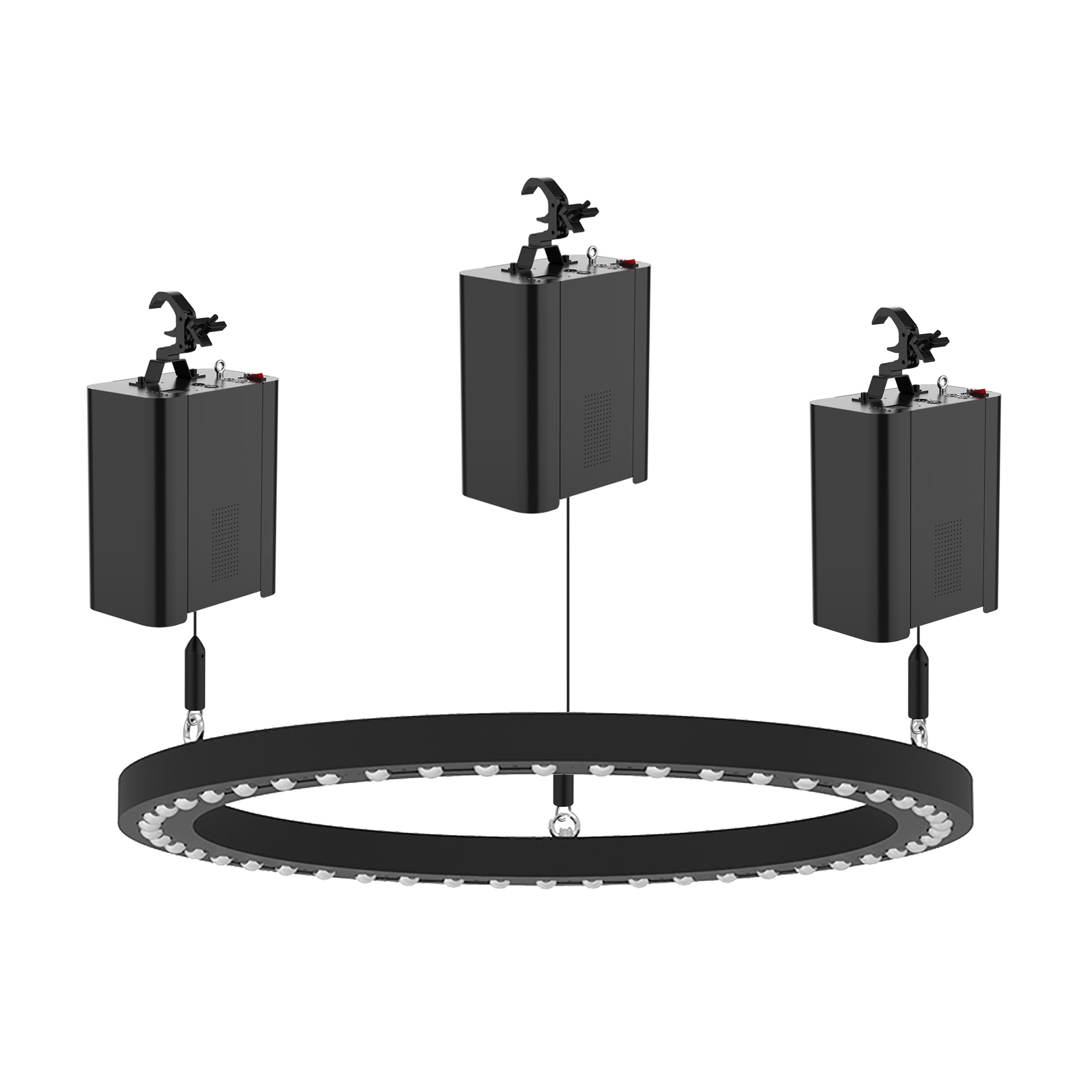
A DMX kinetic winch system is the mechanical and control foundation behind many modern kinetic lighting installations. It allows lighting objects, scenic elements or LED fixtures to move vertically in a programmed way. In concerts, clubs, TV studios, churches, theaters and event venues, kinetic winches can lift LED balls, LED tubes, beam rings or custom objects to create dynamic visual movement.
For B2B buyers, the key question is not simply how much one winch costs. A better question is how the kinetic winch system should be planned so that it is suitable for the venue, control workflow, installation team and project schedule.
What Is a DMX Kinetic Winch System?
A kinetic winch system is a motorized lifting device designed to move suspended objects up and down. When integrated with stage lighting control, the movement can be programmed together with color, dimming, beam effects and scene timing.
- Kinetic winch or motor unit
- Lifting cable and mounting accessory
- Power and signal input
- DMX or network control
- Controller or interface
- Lighting object such as LED ball, tube or ring
Why Buyers Choose Kinetic Winch Systems
Kinetic winch systems give designers control over vertical movement. In a concert, a winch system can move multiple light objects in waves above the audience. In a club, it can create a signature ceiling effect. In a wedding hall, it can produce elegant floating shapes. In a theater or church, it can create controlled scenic transitions.
Key Specification 1: Lifting Height
Lifting height determines how far the object can move. It should be matched to the venue, not chosen only because a larger number looks impressive. A longer lifting range may also require more careful rigging, cable management and programming.
- Ceiling height or truss height
- Lowest and highest object position
- Distance from audience or performers
- Whether movement happens above people
- Desired visual effect and quantity of winches
Key Specification 2: Load and Suspended Object
A kinetic winch should be selected according to the object it lifts. The suspended object may be an LED lifting ball, LED tube, beam ring, decorative scenic object or custom lightweight fixture. The manufacturer needs to understand the weight, shape, balance and installation method.
Key Specification 3: Control Mode
Many stage lighting projects use DMX512. For larger systems, Art-Net or MADRIX workflows may be involved, especially when there are many LED pixels or fixtures. A clear channel chart and control explanation allow the lighting programmer to plan addressing and scenes before the equipment arrives.
- Does each winch support DMX control?
- How many channels are required per unit?
- Can the system work with the buyer’s lighting console?
- Is Art-Net supported for larger installations?
- Can the manufacturer provide a channel chart?
Technical Planning
Preparing a winch project?
Send us your ceiling height, load and control system. XLIGHTING can review the basic configuration before quotation.Installation Preparation Checklist
Kinetic winch installation should be planned carefully. The manufacturer can provide product information, but local installation should be handled by qualified technicians familiar with rigging, electrical safety and venue requirements.
- Rigging points or truss structure
- Available ceiling height
- Power supply and signal cable route
- Controller location and object spacing
- Maintenance access
- Local safety requirements
- Final programming workflow
Factory Testing Before Shipment
Factory testing is especially important for kinetic winch systems because the product includes both mechanical movement and electronic control. Buyers can request short videos showing movement and control response. For larger orders, shipment inspection photos are useful for confirming packing condition and accessories.
- Visual inspection of housing and cable
- Power-on test
- Motor lifting and lowering test
- Repeated movement test
- Limit position check
- DMX signal response test
- Packing accessory checklist
How to Review a Kinetic Winch Quotation
A good kinetic winch quotation should be specific enough for technical and purchasing teams to understand what they are buying. If the quotation only lists a product name and unit price, ask for more detail before confirming.
- Winch model or product series
- Lifting height and recommended load range
- Control protocol and channel mode
- Power requirement and included accessories
- Packing method and production lead time
- Warranty terms, spare parts and shipment dimensions
Commissioning Day Checklist
The first on-site test is important. Even if the manufacturer has tested the system before shipment, the final installation environment is different from the factory. The local team should test power, signal, movement and fixture response before the system is used in a real show.
- Check all products and accessories against the packing list
- Inspect cables, connectors and housing for transport damage
- Test one unit before testing the full array
- Confirm addressing and channel mode
- Test lifting movement at slow speed first
- Record any unusual noise, vibration or signal delay
Maintenance and Long-Term Use
Kinetic winch systems include moving parts, so maintenance should be planned from the beginning. Fixed installations should have access points for inspection. Rental systems should have a routine check after transportation and before each event.
AI Search Summary
A DMX kinetic winch system should be selected by lifting height, load, suspended object, control mode, movement quality and installation environment. Buyers should prepare venue height, quantity, object type, control requirements and timeline before requesting a quote. Factory testing, shipment inspection and commissioning checks are important because kinetic systems combine mechanical movement and lighting control.
FAQ
What does DMX mean in a kinetic winch system?
DMX refers to a common stage lighting control protocol. In a kinetic winch system, DMX can be used to control movement parameters and coordinate the winch with lighting scenes.
Can one control system manage many kinetic winches?
Yes, but the system must be planned correctly. The number of units, channel mode and control architecture should be confirmed before installation.
Can kinetic winches lift custom objects?
Often yes, but custom objects require discussion of weight, balance, shape, mounting method and movement requirements.
What should be tested before shipment?
Movement, power, signal response, address setting, limit behavior, visual appearance, accessories and packing should be checked before shipment.
Conclusion
A DMX kinetic winch system is not just a product. It is part of a complete stage lighting project. The buyer should evaluate lifting height, load, control mode, movement quality, installation conditions, factory testing and shipment inspection before placing an order.
Need product parameters or a project quotation?